- Joined
- Jul 15, 2020
- Messages
- 35
- Reaction score
- 1
Please clarify for me. I've read in several places that the phones provisioned using STUN should be incremented.
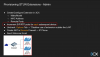
Yet the admin manual recommends leaving the default:

We're a small operation but support some larger ones. Our system runs fine as it is, but if best practice is to increment the ports, then
I'll change all of them. What is the upper limit? I saw some forum posts where older versions had a parameter for this, but don't see one in V16.
Any assistance is appreciated.
3CX Version - Enterprise Annual / 16.0.619
Server OS - Hosted Linux
Is the 3CX Server Hosted and where? - Yes. Cloudco
IP Phone Make/Model/Firmware - Yealink T46S - 66.85.0.5
Provisioning Method: Local / VPN / STUN / SBC - STUN
Trunk Provider or Gateway Make/Model - CloudCo
Has the Firewall Checker passed: YES / NO - Yes
Are custom Phone Templates being used: YES / NO - No
Yet the admin manual recommends leaving the default:
We're a small operation but support some larger ones. Our system runs fine as it is, but if best practice is to increment the ports, then
I'll change all of them. What is the upper limit? I saw some forum posts where older versions had a parameter for this, but don't see one in V16.
Any assistance is appreciated.
3CX Version - Enterprise Annual / 16.0.619
Server OS - Hosted Linux
Is the 3CX Server Hosted and where? - Yes. Cloudco
IP Phone Make/Model/Firmware - Yealink T46S - 66.85.0.5
Provisioning Method: Local / VPN / STUN / SBC - STUN
Trunk Provider or Gateway Make/Model - CloudCo
Has the Firewall Checker passed: YES / NO - Yes
Are custom Phone Templates being used: YES / NO - No