I would also check things locally as well - for example:
* Firmware on the Patton is up to date:
https://www.patton.com/support/upgrades/
* Gateway is provisioned with the latest 3CX template (and 3CX is current:
https://www.3cx.com/blog/change-log/phone-system-change-log/).
* Also where is your gateway in regards to 3CX (VPN and local LAN only are supported for these variants).
* What codec is in use with the audio ?
Failing that you can also prove from site, (setup depending) the randomness of the issue makes this a bit of an issue. However as posted previously (and if you can either replicate or capture) you can run the CLI logging commands from the Patton gateway or run dumpcap for a long period via 3CX (this can be done on Windows or Linux):
https://digitalsupport.ge.com/commu...w-to-use-Wireshark-for-long-duration-captures
If you can capture via Wireshark what you need to look for is/are the following:
(RTP) RFC2833: DTMF digits are transmitted by RTP Events complaint with RFC 2833:
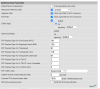
This is your current setting and so long as you are not using sRTP to encrypt the audio (chances with 3CX are very slim) you can see the transmitted digits in the trace:

Using the capture filter
rtpevent in Wireshark.
RFC 2833 is an in-band method that takes DTMF out o the RTP stream (that contains the audio or video) and into its own RTP stream. This means that the DTMF codes can survive even if the main stream is compressed.
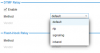
Since RFC 2833 is the most standard method used I would assume the Patton (although the setting does not specify) uses this method and not the older "Inband" way. I know Trinity variants offer 2833, Inband and SIP info however I cannot say for smartware.
 Note
Note: Standard inband is legacy, with Inband digits passed along just like the rest of your voice as normal audio tones using the same codec as your voice does. Obviously, this method inhibits the use of compressed codecs such as G729.
You could also always test/switch to "signalling/SIP INFO" SIP INFO (as below) sends the DTMF digits in SIP INFO messages which can be viewed in Wireshark in the RTP stream itself.
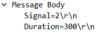
With this method you can also alter the transport type (as it is carried in the SIP signalling) to TCP (from UDP). TCP is a more reliable transport protocol as it ensures packets are delivered (using the SYN >> SYN/ACK >> ACK 3-way handshake).