The best is to completely modify all the DID in 3CX.
The
ITU-T E164 ( as defined in
RFC 3761 ) model is a “
PROPOSED GLOBAL STANDARD” .
To clarify, the E.164 format has benefited from several revisions to adapt to different realities.
E.164 numbers were originally defined for use in the worldwide
public switched telephone network(PSTN).
The early PSTN collected routing digits from users (e.g. on a dial pad), signaled those digits to each telephony switch, and used the numbers (Without +) to determine how to ultimately reach the called party.
ITU-T
E.123 entitled Notation for national and international telephone numbers, e-mail addresses and Web addresses provides guidance when printing E.164 telephone numbers. This format includes the recommendation of prefixing international telephone numbers with a plus sign (
+) and including visual separators such as the hyphen (
-).
After,
RFC 3761 defines the format of the phone number as:
The Application Unique String is a fully qualified E.164 number minus any non-digit characters except for the "+" character which appears at the beginning of the number.
The "+" is kept to provide a well understood anchor for the Application Unique String in order to distinguish it from other telephone numbers that are not part of the E.164 namespace.
So, in the end, after revision, the definition of E164 is as described here ;
E.164 is the international telephone numbering plan that ensures each device on the PSTN has globally unique number.
This number allows phone calls and text messages can be correctly routed to individual phones in different countries. E.164 numbers are formatted [+] [country code] [subscriber number including area code] and can have a maximum of fifteen digits. [¹] |
But, Still today, many PSTN or SS7 network provider interprets E.164 format on its first version; without the + .
It is for this reason that Telnyx and some other providers (At least, at North America) avoid misunderstandings and specify the + in the name E.164 . While understanding that this name (+E.164) is not recognized by the RFC and ITU-T. There you go, don't be surprised if you see +E164 .. This is simply another way of defining E164 at its most recent definition
Read Telnyx Guide to ensure that incoming calls will continue to work properly.
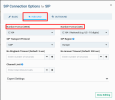
Set +E.164 DNIS format to get the correct format ( +16024XXXXXX ).
The ANI is your Caller's CID (inboundcall).
Although I also recommend it, it could disrupt the operation with the CRM integration, Contacts and conditions "Session.ani » CallFlow. So only modify if there is no dependency on the format of the telephone number of your callers.
What was your question again?
Should I add the plus to all the non-sms DIDs too just as a precaution since I did not need it before. Hope it only affects the sms haven't had a problem in calling so far.
Ahh , yes, yes, I suggest it to you but make sure your configs are also there in the Telnyx portal

! LOL
@ConceptsWeb
I tried to make a short answer lol!
You can laugh!! lol
Not easy, not easy!
My recipe ;
Subject, Verb, subject subject subject subject verb verb complements complements complements references
[dot]
There is clearly a flaw in my recipe

It's “self-mockery”

.. I self-assume .. lol