What is an Omnichannel Contact Center?
An omnichannel contact center is a customer service solution that combines multiple digital and voice communication channels—such as phone, live chat, email, social media, and video—into a single, unified platform.
An omnichannel contact center is a contact center that combines multiple communication channels allowing customers to contact a business in the form that they prefer. It focuses on addressing customer needs and providing a seamless experience for customers.
Omnichannel solutions include 4 main features:
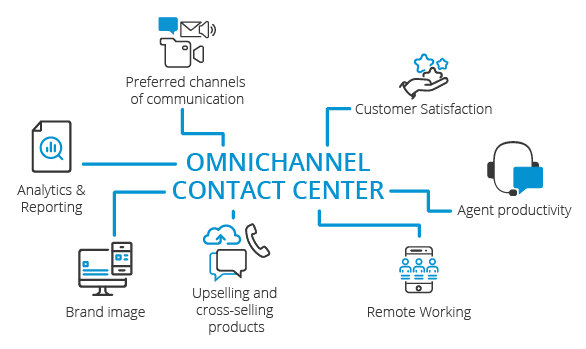
Key Digital Channels - Businesses need to identify customer expectations around preferred channels of communication. This can include email, phone, texting, live chat, self-service options (such as online help centers), social media, and video calls. The goal is to allow for customer interaction based on your own preferences.
Platform integration - Transforming a call center to manage multiple communication channels can be complicated unless the various channels are combined on a single platform. One aspect of this is to have built-in tools, such as video conferencing. Another aspect is to integrate platforms that are provided by other services, such as replying to social media messages or syncing CRM contacts. Agents need a tool where they can see all communications in real-time without signing into a large number of separate services to check for messages.
Unified tracking - Clients will get in touch via various different channels. An omnichannel contact center tracks client messages across all of these channels making it possible to see all conversations with a particular client in a single place.
Reporting - A contact center may include call reporting and analysis for managers to track response times, resolution times and other key indicators across all channels. Having a unified reporting dashboard is essential to delivering consistent service in an omnichannel contact center environment.
The most recent development in the omnichannel customer service experience is the use of artificial intelligence to analyze large amounts of contact data and to provide insights that may otherwise be missed. Artificial intelligence may also be harnessed for interactive voice response or chatbots to provide information based on previous customer data.
Omnichannel vs multichannel contact center
In terms of contact centers, “omnichannel” and “multichannel” are often used interchangeably. The consensus is that a multichannel contact center refers to the first item above - simply having all the right communication channels. In this view, an omnichannel contact center solution means there is integration and unified communication. So while a multichannel solution focuses on engaging as many customers as possible through multiple channels, with omnichannel the focus is more on improving the customer experience.
Omnichannel Contact Center Benefits for Businesses
The essence of omnichannel platforms is the customer journey - specifically providing a unified experience. This means when a client calls after a web chat conversation earlier in the day, the agent who answers can see the messages they sent and any responses. The agent then has the context to help the customer more effectively. This points to several benefits of the omnichannel approach which we list below.
Agent productivity - Contact center agents won’t need to spend time finding messages on different platforms. All communications will be at their fingertips and they will be better informed, more quickly. It will also allow them to see which other agents were in contact and touch base with those agents for more info.
Improved insights - Management will have access to a holistic view of all digital channels. Contact stats won’t reflect only emails or phone calls, but also social media, text messages, and other channels. This enables management to make more informed decisions.
Customer satisfaction - The two items above lead to improved customer service. When customers contact a business, they will not only be able to do so via the channel they prefer, but they will be given better service when they get in touch. As a result, customer loyalty will grow. Of course, this will have a direct impact on customer retention and the bottom line.
Best Practices for Omnichannel Contact Center Success
Identify the top communication channels preferred by your customers: Understanding which channels your customers use most, such as email, social media, or phone, helps tailor your omnichannel strategy to maximize engagement and satisfaction.
Don’t ignore social media messages: Social media is a critical communication channel. Ignoring messages on your social media channels can damage your reputation. Make sure to monitor and respond to inquiries promptly and consistently.
Improve Interactive Voice Response (IVR) menu options: A clear and intuitive IVR system makes it easier for customers to navigate and reach the right department, reducing frustration and improving service.
Offer a consistent cross-channel experience: Ensure that customer interactions across all channels are flawless, so customers experience the same level of service regardless of how they contact you.
Schedule automatic customer and agent behavior reports: Regular reporting helps you monitor performance, identify trends, and make data-driven improvements to both agent productivity and customer satisfaction.
Make it easy to connect with a live agent - canned responses only get you so far: While automated responses can help manage initial inquiries, providing quick access to live agents for more complex issues is crucial for customer satisfaction.
Integrate third-party communication and CRM tools: Connecting your contact center with CRM tools and other communication platforms ensures agents have the full context of customer interactions, enabling more personalized and efficient service.
Why choose 3CX as your omnichannel contact center?
3CX integrates your favorite communication channels, providing a complete omnichannel experience for your customers as well as offering them detailed reports and insights.
Phone, Fax & Voicemail - Basic phone communication remains at the core of communication for many businesses.
Video Conferencing - Customer service agents can launch built-in web conferencing and video calls from the web or mobile apps.
CRM Integration - Sync clients and access communications from Zendesk, Salesforce, Freshdesk, Microsoft 365 and other CRMs.
Live Chat - Agents can chat with visitors on a company website to convert visitors to leads, or provide another channel of customer support.
WhatsApp - Answer WhatsApp business messages from 3CX in a timely manner. Via the integration, groups of staff can respond to incoming WhatsApp messages, not being tied down to a single device. You can also keep a central record of all your chat conversations.
Text Messages for Business - SMS has become a preferred way for many people to get in touch. Integration means agents can reply from a business phone number.
Your questions answered…
We’ve done our best to answer some common questions about omnichannel contact centers.
The key difference between a multichannel and an omnichannel contact center lies in the integration of communication channels. Multichannel contact centers support various communication methods (like phone, email, and social media) but treat each channel separately. In contrast, omnichannel contact center software integrates all channels, allowing customers to switch between them without losing context.
Customers prefer omnichannel contact centers because they offer a unified experience across all devices and platforms. Whether customers engage through phone, social media, or email, their interactions remain consistent, ensuring smoother communication. This flexibility empowers them to connect via their preferred method, saving time and enhancing satisfaction. In a multi-faceted modern digital world, customers now expect consistency across all platforms By providing this continuity, businesses enhance customer loyalty, improve service quality, and drive efficiency.
The 4 C's of omnichannel are Consistency, Convenience, Communication, and Customer-Centricity.
Consistency ensures customers receive the same quality service across all channels.
Convenience enables customers to interact with your business on their preferred platform, making the process seamless.
Communication is key, ensuring smooth and timely interactions between customers and agents.
Customer-Centricity means putting the customer’s needs first, tailoring solutions for a personalized and efficient experience. These principles help build trust and satisfaction, boosting loyalty and retention.
Further reading
Last Updated
This document was last updated on 4 July 2025
https://www.3cx.com/contact-center/omnichannel/



 Copyright © 2026