


What is a PBX phone system?
A PBX (Private Branch Exchange) Phone System is a private telephone network used within an organization. It allows users to communicate internally and externally using different communication channels like VoIP, ISDN, or analog. Key features include call routing, voicemail, call conferencing, and more..
In this article, we’ll break down what a PBX phone system is, the benefits they bring to businesses, and how we make them easy and affordable at 3CX.

Introduction to PBX Phone Systems
A Private Branch Exchange (PBX) is a private telephone network used within a company or organization. It allows internal communication between employees and external communication with the outside world. Modern PBX systems, like those offered by 3CX, utilize Voice over Internet Protocol VoIP (VoIP) technology, enabling businesses to manage calls efficiently over the internet.systems, which let users make calls over the internet.
A PBX telephone system allows businesses to have more phone lines and allows free calls between users. It also provides features like call transfers, voicemail, call recording, interactive voice menus (IVRs) and call queues.

Key Features of 3CX PBX Systems
-
Unified Communications: Integrate voice, video, chat, and email into a single platform.
-
Remote Accessibility: Access your phone system from anywhere using mobile and desktop apps.
-
Advanced Call Management: Features like call forwarding, voicemail-to-email, and auto-attendants enhance customer experience.
-
CRM Integration: Seamlessly connect with popular CRM systems for improved customer interactions.
-
Scalability: Easily add or remove users as your business grows.
Benefits of Implementing a PBX Phone System
- Cost Savings: Reduce communication expenses by leveraging internet-based calling.
- Enhanced Productivity: Streamline communication processes, leading to improved efficiency.
- Professional Image: Utilize features like custom greetings and hold music to project a polished image.
- Flexibility: Support for remote work and multiple office locations ensures seamless operations.
- Improved Customer Service: Efficient call routing and management lead to better customer satisfaction.
Switching to an IP PBX brings with it many benefits and opens up possibilities, allowing for almost unlimited growth in terms of extensions and trunks, and introducing more complex functions that are more costly and difficult to implement with a traditional PBX, such as:
- Ring Groups
- Queues
- Digital Receptionists
- Voicemail
- Reporting
- Intercom / Paging
Types of PBX phone systems
A PBX phone system can be installed on-premise or hosted in the cloud. We've gone into more detail on this below.
On-Premise PBX Systems
The first PBX systems were all on-premise, and used physical phone lines to connect the Plain Old Telephone Service (POTS) to a Public Switched Telephone Network (PTSN). This setup has become less common with the phasing out of the Integrated Services Digital Network (ISDN). Today, on-premise PBX systems generally use SIP trunking and VoIP to support internet-based communications. They're a reliable choice for large enterprises, as they handle infrastructures with numerous extensions effectively.
Cloud/Hosted PBX Systems
Hosted PBX systems are also known as cloud PBX systems, because they run entirely in the cloud. This eliminates the need for on-site hardware and makes expansion simple. Like on-premise systems, a hosted PBX system uses SIP trunking and VoIP to allow internet-based calls. With 3CX, your PBX can also be self-hosted, which gives you full control by allowing you to host the system with your own Amazon AWS, Google or Digital Ocean account.
For more information, we recommend taking a look at our blog post on choosing a PBX solution.

User preference
Salesforce reported that 88% of customers use phone calls to engage with companies. By implementing a PBX system, you're not just keeping up with customer preference, you're ensuring that your business can provide the immediate, personal support customers expect.
Cost savings
Despite legacy systems having fewer features, they tend to cost more both in maintenance and in monthly phone bills. With a PBX system, you can lower maintenance expenses, cut down on monthly bills by using internet-based communication, and avoid costly hardware upgrades.
Easier to maintain
Dedicated wiring and hardware requires specialized service. Because a modern phone system uses an internet connection, they can use existing LAN infrastructure. System maintenance is mostly over a computer interface and users can add a second phone line, for example, in minutes.
Connect over the internet
Besides easier maintenance, using internet connections means businesses can access their phone system from anywhere. This makes it easier to bridge multiple offices.
Mobility and remote work
Even if users are not in any office, they can still use a web browser or cell phone to manage their communications. On a web or mobile app, users can call a colleague's extension, answer incoming calls or call external numbers. They can also see caller ID, transfer calls and set up call forwarding. In addition, some office phone systems integrate video and business texting.
Easy expansion
An IP phone system is also easier to expand. Adding a new extension can be as easy as setting up a user online, then plugging in a phone. 4finance, a a fast-growing multinational company, found that upgrading to 3CX's IP PBX not only accommodated for their expansion, but also lead to an increase in staff productivity thanks to the ease of use it offered.
Modern business communications
Modern PBX systems include tools like video calls and web conferencing, enabling face-to-face communication no matter where your team or clients are located, as well as instant messaging and social media responses for an omnichannel approach.
Integration with other software
Business software is moving towards cloud computing and an IP PBX can integrate with CRMs, for example. This would allow businesses to sync contacts and manage information in a single location.
Advanced technology
PBX office technology opens the door to a greater variety of phone access:
- Softphones: Softphones can turn any computer into a phone, allowing users to make and receive calls through software. This makes them flexible and easy to use, especially for remote teams.
- Web phones: Web phones offer the convenience of a softphone but run directly in a web browser. This makes them accessible from any device with a browser, using secure credentials, without needing to install additional software.
- Mobile apps: Mobile apps let users access their business phone number and features from their personal smartphone. This means you can stay connected to your office extension wherever you are, making it ideal for remote work and on-the-go communication.
What to look for in a PBX system
This section will walk you through the key things to keep in mind when choosing a PBX system, making sure it not only fits your business now but can easily grow with you.

1. Scalability
Your business will likely grow, and your PBX system should grow with it. Start by assessing how easily the system can scale. This means you won’t need to worry about outgrowing your system or facing complicated upgrades in the future.
2. Easy setup and management
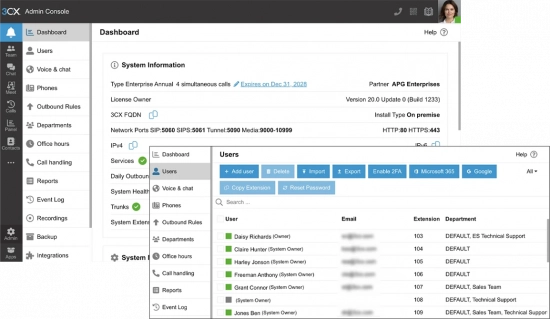
Choose a PBX system that's quick to set up and easy to manage. It should offer clear installation steps and a simple dashboard for handling tasks like adding users or updating settings. This way, your team can manage it without needing constant IT support, saving time and avoiding disruptions.
3. Ease of use
Look for a system that's intuitive and easy for your team to use right away, with little to no learning curve. They should be able to get started with managing calls on devices they already know, like desktops or smartphones, as soon as the system is set up.
4. Cost structure
Cost predictability is key. Look for a PBX solution that offers a flat annual fee rather than variable monthly per user charges. This way, you avoid unexpected costs and can budget more effectively. Be sure to check if the system requires expensive add-ons or upgrades down the line.
5. Flexibility with VoIP providers and hardware
Your provider should give you the freedom to choose your own VoIP providers and hardware. This ensures you're not locked into expensive, proprietary options. Being able to select your own providers allows you to shop for the best rates and services that suit your business’s unique needs. The ability to choose your own hardware means you can control costs and upgrade devices when you’re ready.
6. Variety of features
A good PBX system should come equipped with a variety of phone features designed to improve communication and boost productivity. At a minimum, your system should offer essential tools such as:
- Voicemail
- Call forwarding
- Call queues
- Video conferencing
- Interactive voice response (IVR)
These features make it easier for your team to collaborate and stay connected, whether they’re in the office or working remotely. Additionally, consider any specific needs your business may have, such as CRM integration, reporting tools, or mobile app support.
7. Strong Security
With modern communication systems, security is a top priority. Ensure that the system you choose has strong security features like encryption, firewalls, and user authentication to protect your data. A cloud based PBX system will often include built-in security standards, which is a significant advantage for protecting sensitive business information.
Why choose 3CX as your business phone system?
3CX has established itself as the leading IP-PBX manufacturer, ticking all the checkboxes for any business looking for enterprise-grade features. Here's what you can expect from us.
- Low Pricing: 3CX offers flat rate annual pricing. When compared to monthly plans that charge per user, this can save businesses up to 80% on monthly phone costs.
- Range of Options: Choose from on-premise, hosted, and self-hosted PBX to meet your business needs exactly.
- Flexible Licensing: Pricing is also based on simultaneous calls. If a business has 50 users, most phone system providers charge for all 50 lines, even if they use only 10 lines at a time.
- Complete Communication System: 3CX offers video conferencing and live chat included in the cost. It also integrates with the most common CRMs, WhatsApp and instant messaging.
- Flexibility: With 3CX, businesses choose their own SIP trunk and VoIP phones. Since 3CX is open standards, it integrates with most common service providers and hardware. This means savings on hardware, toll-free numbers, long-distance calling and more.
- Mobility: 3CX offers full-featured apps for web browsers as well as iOS and Android devices.
- Easy Scalability: As a business grows, 3CX's software scales easily. Flexible licensing likewise makes it easy to increase, or reduce, phone service.
Your questions answered...
We've answered the questions we get asked most often about PBX below.

 Copyright © 2026