


Difference between PABX and PBX
The difference between PBX and PABX is simple. A PBX is a Private Branch Exchange, while a PABX is a Private Automatic Branch Exchange. The only difference is the word “automatic.”
Since manual PBXs are no longer in use, the two terms are now used interchangeably. Still, it’s worth understanding the automatic features modern PBX systems offer.
What Is a PABX?
A PABX system automatically routes incoming and outgoing calls within a business. It connects internal users to each other and to external lines, using software to manage call routing without manual input.
PABX systems support multiple lines, extensions, voicemail, call forwarding, and conference calls—all from one unified platform.
PABX vs. PBX
The original PBX relied on switchboard operators who manually connected calls by plugging lines into extensions.
That was already a step up from the plain old telephone system (POTS), which required a dedicated line per desk. Features like internal dialing, call transfer, and shared access numbers didn’t exist.
With electronic switching, the automatic PBX - or PABX—replaced manual operators. Staff could dial an internal extension directly. Today, nearly all PBX systems are automatic, so every PBX is effectively a PABX.
How a PABX System Works: IP communications
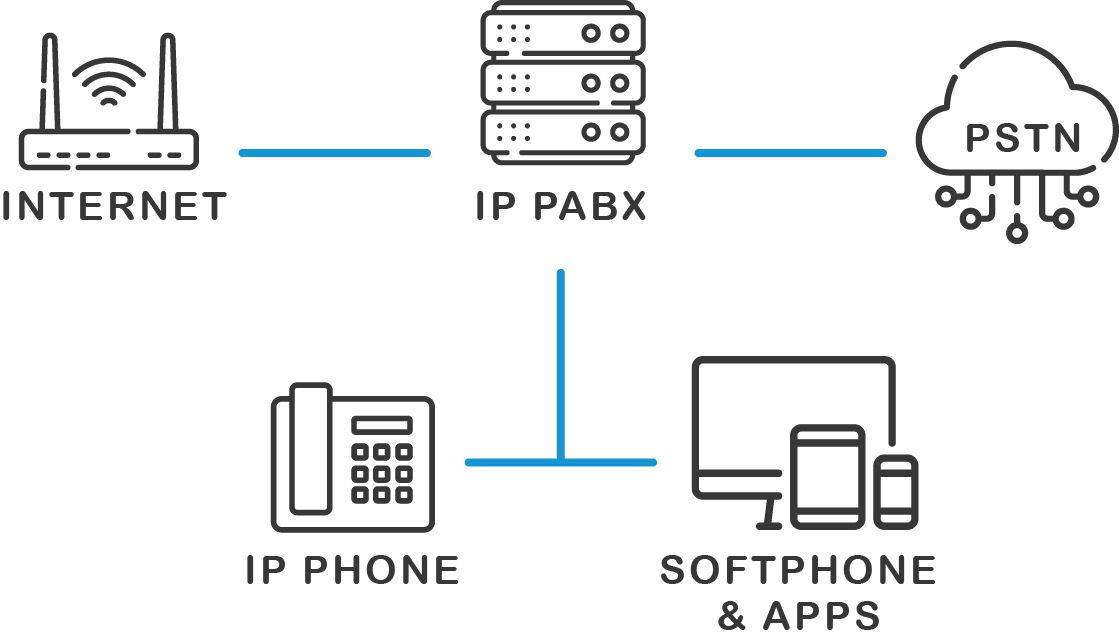
Modern PABX systems have already evolved to use IP (internet protocol) communications. With internet service available in most places, a PABX now works over a LAN (local area network) or internet connection. This is often called an IP PBX.
These systems connect a business's SIP phones (session initiation protocol) and VoIP phones (voice over IP). It also connects the internal system to the public network, or public switched telephone network (PSTN), which basically means connecting to outside lines. Businesses can now use their office extension on a web browser or a personal cell phone.
The IP PABX has opened the door to further automation. For example, businesses can set up automatic call forwarding rules based on time of day or specific extensions. Callers can now tell an auto-attendant what extension they want or what they’re looking for verbally. Auto attendants recognize different languages.
The system alerts other users when the extension a caller wants is busy (BLF - “busy lamp field”). Phone systems can connect with calendars and automatically set a user's availability accordingly. Even caller ID, which is now a standard feature, is possible as a result of automation.
While the difference between a PABX and PBX system may no longer be relevant, automation has continued to grow, faster than ever.
PABX Systems Key Features
Business telephone systems will do well to continue paying attention to new automation features. A PABX phone system comes with the following features:
What are the Benefits of PABX Systems?
Some advantages of using a PABX phone system include:
Why use 3CX as your PABX system?
3CX delivers a complete PABX solution with strong advantages:
- Low Costs - Flat annual pricing by simultaneous calls, no per-user fees
- Flexible Setup - Works with SIP trunks, existing servers, and IP phones
- Remote Work Ready - Mobile and browser apps keep users connected anywhere
- Unified Communications - Includes video calls, fax, and live chat
- Advanced Call Center Tools - Wallboards, queues, and strategies via 3CX PRO
Your questions answered…
Here, you'll find answers to some of the most common questions about PABX systems.
Further reading
Last Updated
This document was last updated on 4 July 2025
https://www.3cx.com/phone-system/pabx/